Math Anxiety Starts Earlier Than We Think
Math anxiety doesn’t start with failure. It starts with fear. If your child says they’re “bad at math,” this thoughtful piece explores how math anxiety forms early and how parents can support confidence without pressure.
LEARNING & CURIOSITY
Lardi
2/21/20268 min read

How Children Learn to Fear Numbers Long Before They Struggle With Them
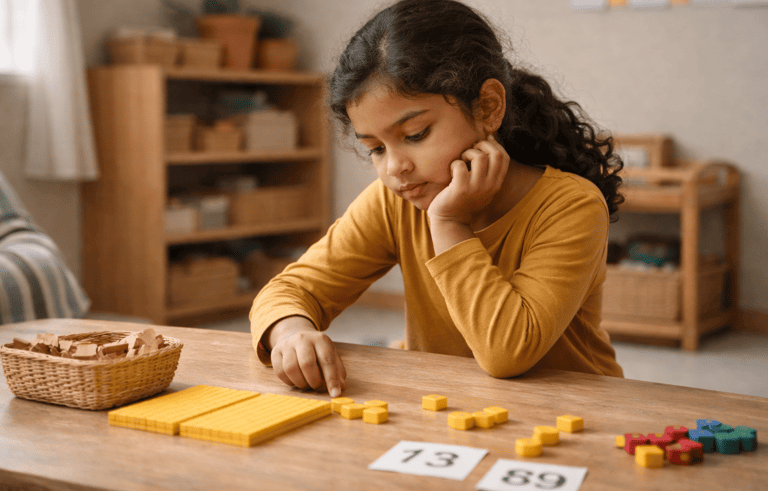
It often sounds casual at first. “I’m just not good at math.” The child says it lightly, almost as if they are sharing a preference. But they are seven, or eight, or nine. And the sentence lands heavier than it should. Parents repeat it with a nervous laugh. Teachers pause when they hear it, because children are rarely born believing they are bad at math. They learn it.
Math anxiety often starts small. A timed test that rewards speed over thinking. A public correction that feels bigger than the mistake. A comparison that was meant to motivate but instead embarrassed. A belief that there is one right way, and it must be fast.
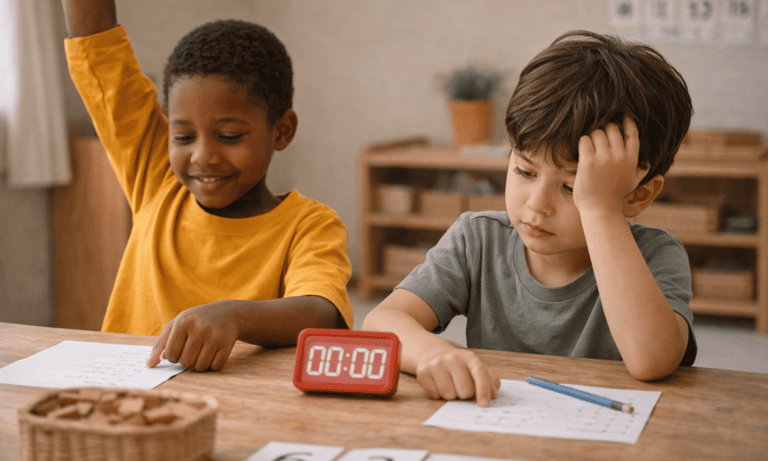
Sometimes it begins in a moment so ordinary no adult notices it. The timer starts. A child glances up and sees three classmates already writing. Pencils move quickly. Pages turn. The child is still reading the first question. A small heat rises in their chest. They begin rushing, not because they understand, but because they feel exposed.
Nothing dramatic happens. No tears. No refusal. Just a quiet shift. For some children, it begins when effort is praised less than correctness. “Good job” is reserved for right answers, not thoughtful attempts. For others, it begins when mistakes are treated as interruptions rather than information. A correction offered quickly, efficiently, publicly.
Children are perceptive. They track patterns. If mistakes bring visible attention, they begin to avoid them.
If speed brings praise, they begin to equate quickness with worth. If there appears to be only one correct pathway, they stop exploring alternatives. The math itself is rarely the problem. The story forming around it is. And once that story settles, even lightly, it shapes how the next problem feels.
What Math Anxiety in Elementary School Really Looks Like
In elementary classrooms, math anxiety does not usually arrive as panic. It arrives as avoidance.
A child who rushes through problems without checking.
A child who freezes when asked to explain their thinking.
A child who erases holes in the paper but never raises their hand.
A child who says, “I don’t know,” before they have tried.
Sometimes it looks like a child staring at the clock instead of the numbers, calculating how much time is left rather than how to solve the problem in front of them. They are not failing to understand math. They are protecting themselves from the feeling math gives them.
What teachers notice before parents do
After years in elementary classrooms, I have seen patterns repeat. Children who fear math are often careful, thoughtful learners. They want to do things correctly. They reread directions. They check their work. They notice details others skip. They feel mistakes deeply because they care deeply.
This conscientiousness is often mistaken for fragility. In reality, it is sensitivity to evaluation. When math becomes a place where mistakes are visible, timed, or publicly evaluated, these children retreat. Not because they lack ability, but because they sense risk. The risk of being wrong in front of others. The risk of confirming a doubt that has begun to grow.
Adults may interpret the retreat as disengagement. The child stops volunteering answers. They complete work quietly. They choose easier problems when given options. They say, “I don’t know,” before trying. But what is happening internally is more complex. They stop wondering and start guessing. They stop asking and start memorizing. They stop enjoying and start enduring.
Over time, this protective posture becomes habit. The child who once explored patterns with curiosity now approaches math cautiously, measuring each response before offering it. Confidence rarely collapses all at once. It erodes quietly, in small daily moments where thinking begins to feel unsafe. And unless that environment shifts, the child adapts to survive it.
Why speed gets mistaken for ability
Many elementary math classrooms unintentionally reward speed. Fast finishers are praised. Timers are projected. Worksheets move briskly from one page to the next. A child who completes ten problems in three minutes is often celebrated more visibly than a child who solves five with careful reasoning.
But speed is not the same as understanding. Speed measures recall. Understanding measures thinking. When children are under time pressure, working memory narrows. Cognitive load increases. Flexible reasoning decreases. The brain shifts from exploration to urgency. For some learners, especially those who process verbally or visually rather than automatically, timed conditions do not reveal ability. They reveal stress response.
Some of the strongest mathematical thinkers are slow on paper. They pause before writing. They replay the question in their minds. They test an idea, discard it, and try another approach. They ask themselves whether the answer makes sense before committing to it. Their work may look sparse, but their thinking is layered.
When classrooms consistently equate quickness with competence, children internalize a quiet message. Smart means fast. Fast means confident. Slow means struggling.
For students who process more deliberately, this message reshapes identity. They may begin to rush, abandoning strategies that once worked. They may stop checking their reasoning because accuracy feels less valued than pace. Or they may withdraw entirely, deciding it is safer to be silent than slow.
Often, they are not behind. They are thinking deeply in a system that moves quickly. When we separate speed from intelligence, we widen the path to math confidence. We make room for different kinds of thinkers. In that space, children who once doubted themselves begin to reengage.
A familiar home moment
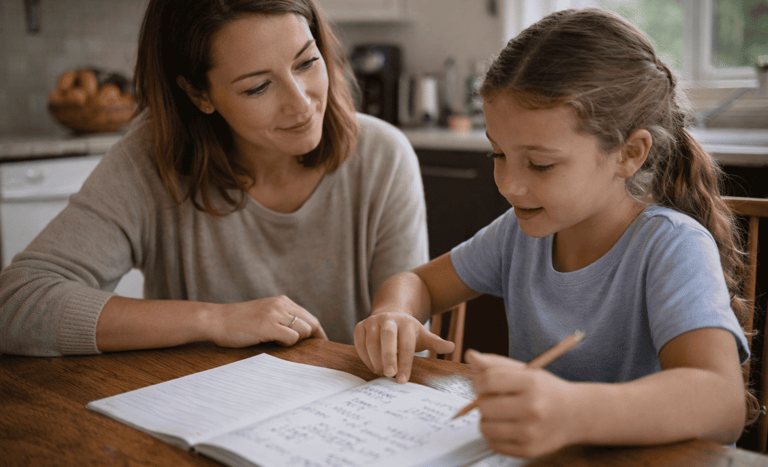
Math anxiety does not stay at school. It shows up at the kitchen table. A worksheet lies between parent and child. The problem looks familiar. The method was understood yesterday. But tonight, everything feels tangled.
Parents explain it again. They draw circles. They use counters. They say, “It’s actually simple,” which is rarely helpful. The child’s shoulders rise. The eraser begins to disintegrate. Sometimes both people at the table are quietly wondering who approved third grade math.
What looks like defiance is often fear. Fear of being wrong. Fear of disappointing. Fear of confirming a belief that has already begun to settle in: I am not good at this. In these moments, the math itself is rarely the central issue. The emotional weight attached to it is. When the emotional temperature drops, thinking returns. Not dramatically. Not magically. But noticeably, and sometimes, the bravest thing a parent can say is, “Let’s just look at the first step together.”
What actually builds math confidence
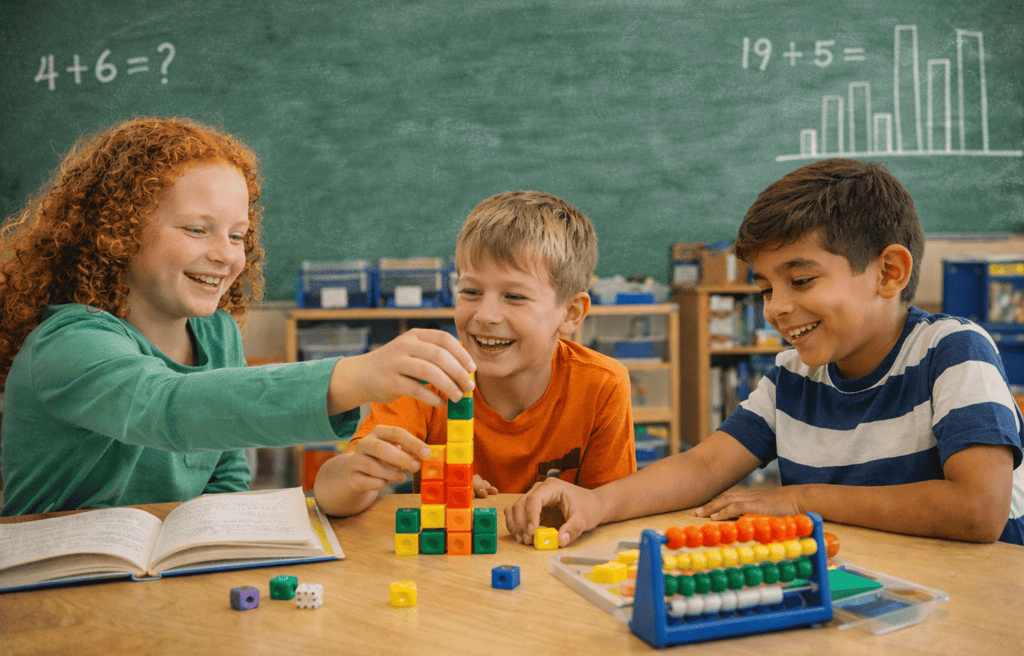
Confidence is not a personality trait. It is a response to environment. Math confidence does not grow from getting every answer right. It grows from feeling safe enough to think out loud. In classrooms where confidence takes root, you will hear students explaining unfinished ideas. A child might say, “I tried this way first, but then I noticed…” and no one rushes to interrupt.
The teacher does not immediately confirm or correct. Instead, they ask, “Tell us how you saw it.” That pause matters. When mistakes are treated as information rather than failure, something shifts. A wrong answer becomes a doorway into reasoning. A partial strategy becomes evidence of thinking. The room slows just enough for understanding to stretch.
Children who struggle with math anxiety are often not confused about numbers. They are unsure whether it is safe to reveal their thinking. If every answer feels like a performance, anxiety rises. If math becomes a conversation, anxiety loosens.
Confidence forms when:
effort is noticed, not just correctness
multiple strategies are welcomed
revision is normal
thinking is discussed openly
When math is treated as a process rather than a public test of ability, children begin to trust themselves inside it. And trust is the beginning of confidence.
What helps at home, quietly
When a child is afraid of math, the instinct is often to fix the problem quickly. To explain again. To show the correct method. To get the homework finished. But fear rarely responds to speed, it responds to tone. If your child says, “I’m bad at this,” pause before correcting the statement. Instead of replying, “No you’re not,” try asking, “What part feels tricky right now?” This shifts the focus from identity to experience.
If they say, “I don’t get it,” resist jumping straight into instruction. Try, “Show me where it started to feel confusing.” When children retrace their thinking, they regain a sense of control. If homework ends in tears, step back from the worksheet for a moment. Sit beside them without holding the pencil. Let them explain their thinking, even if it is incomplete. Especially if it is incomplete.
And just as importantly, notice your own history with math. Many adults carry quiet stories about numbers. “I was never good at math.” “I hated fractions.” Children absorb those sentences quickly. Even casual remarks shape belief. Supporting math confidence in kids at home often means modeling curiosity:
“That’s interesting. Tell me how you figured that out.”
“I wonder why that strategy didn’t work.”
“Let’s look at it another way.”
You do not have to reteach the lesson. You do not have to know every answer. You only have to make the space feel safe.
A reframe worth holding onto
Math anxiety in elementary school is rarely about ability. It is about environment. This does not mean lowering expectations. It means examining what we are measuring. Are we measuring speed, or are we measuring thinking? Are we praising quick answers, or thoughtful reasoning?
Some children process visually. Some verbally. Some need silence. Some need to talk it through. When one style is elevated as the “smart” way, others quietly retreat. Reframing math from performance to exploration changes the internal message children receive. Instead of: “I have to get this right.” It becomes: “I get to figure this out.” That shift is subtle. But it changes how a child approaches difficulty. It widens the path toward understanding instead of narrowing it. And when the path widens, anxiety has less room to dominate.
Beliefs formed early can feel permanent. But they are not. Math anxiety in children softens when the conditions change. Not overnight. Not dramatically. But steadily. It might look like a child raising their hand again, even if they are unsure. It might look like a child explaining their thinking instead of shutting down.
It might look like a homework session that ends without tears.
Children do not need to love math to succeed in it. They need to trust that struggling does not define them. They need to experience mistakes as part of thinking, not evidence of failure. When math becomes a place where thinking matters more than speed, and effort is visible even when answers are unfinished, fear begins to loosen its grip. Confidence returns quietly. First as willingness, as curiosity, then as persistence.
And once a child experiences math as something they can approach without shame, the sentence “I’m just not good at math” begins to lose its authority. Not all at once. But enough. Enough for a hand to rise. Enough for a risk to be taken. Enough for a child to see numbers not as a verdict, but as an invitation. And sometimes, that invitation is all they need to begin again.