
Why do kids melt down after school?
By the end of the school day, children have used every ounce of self-control they have. This piece explains why kids melt down after school , why they’re a sign of effort, and how parents can respond with steadiness instead of guilt.
CHILD DEVELOPMENT
Lardi
2/3/20264 min read
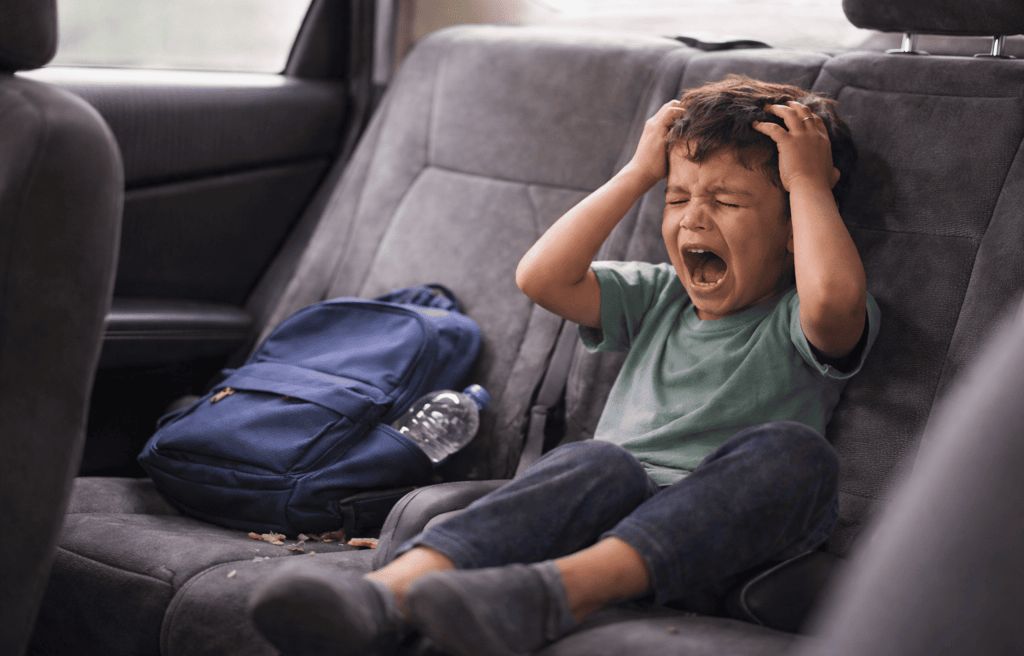

The Backpack Effect No One Warns Parents About
By the time you buckle them into the car, the day finally spills out. The shoes come off with unnecessary force. The water bottle tips. A perfectly reasonable question like “How was school?” lands like an insult. And suddenly the child who held it together for six hours is crying, snapping, or collapsing into the seat like they have run a marathon you were not invited to watch.
And often, this is landing on a parent who is also ending their day on empty. Shoes still on. Brain still buzzing. Wondering how it is already this hard and it is not even dinner yet. Parents often look at me with the same confusion during conferences. “They’re fine at school,” they say. “Why are they like this at home?” The short answer is not because something is wrong. The longer answer is because school takes everything they have.
The part of the day no one sees
Elementary school looks gentle from the outside. Small chairs. Bright walls. Artwork taped slightly crooked. But inside those hours, children are doing heavy work. They are listening when they would rather talk. Sitting when their bodies want to move. Managing friendships, expectations, transitions, noise, rules, and feelings they do not yet have words for.
They are remembering where to line up, when to raise a hand, how to ask for help, how not to cry when they miss home, how to keep going when something feels hard or unfair. And most of them are trying very hard to do it well. After years in elementary classrooms, one pattern shows up every single day. The children who fall apart at home are often the same ones who worked the hardest to stay regulated at school. This is not a failure of parenting. It is not a failure of school, but rather a sign of effort.
The quiet myth parents carry
Somewhere along the way, we absorb a quiet belief that good days should produce good evenings. If school went well, the child should come home calm, cooperative and pleasant. Ready for homework and dinner conversation. But that belief ignores how children manage themselves in public spaces.
School requires children to hold their emotions in place. To wait. To perform a version of themselves that fits the room. By the time the backpack hits the floor, that version is exhausted. Home is not where they behave best, home is where they finally exhale.
What teachers expect, even if parents do not
This is something teachers rarely say out loud, but most of us expect after school meltdowns. We see the signs during the day. The child who needs extra reminders. The one who grows quiet by the afternoon. The one who tries just a little too hard to please.
By dismissal, we know the release is coming. Sometimes it is held together by routine, a promised snack, and sheer determination. Sometimes by nothing at all. And when parents apologize for it, we want to tell them this instead: Your child is not saving their worst behavior for you. They are saving their safest self.
Why it often looks worse than it is
After school behavior can feel extreme because it is layered. There is hunger, exhaustion and overstimulation. There is also emotional residue from small moments that felt big to them. Add one innocent request like “Did you finish your homework?” and the whole structure collapses.
This is not manipulation. It is overload. Children do not yet have the tools adults use to decompress. They cannot take a quiet walk alone, scroll in silence, or explain exactly what drained them. Their bodies speak first, often, loudly.
What actually helps in that fragile window
The most effective after school support is not correction. It is transition. A few simple shifts can change the entire tone of the evening.
First, lower the demand.
The moment right after school is not the time for lessons, lectures, or logistics. Decompression needs to come before discussion.
Second, offer something grounding.
Food, water, quiet time, movement, or simply being near you without conversation. Many children regulate through presence before words.
Third, delay the questions.
“How was your day?” can wait. If they want to talk, they will. If they do not, trust that silence is also communication.
Fourth, normalize the release.
Instead of “Why are you acting like this?” try “That was a long day.” Language that names effort reduces shame, for children and for parents who are already holding a lot themselves.
None of this means you accept hurtful behavior without boundaries. It means you meet exhaustion with understanding before expectation.
A quiet reframe that changes everything
After school meltdowns are not a sign your child cannot cope. They are a sign your child did cope all day long. The goal is not to stop the release entirely. The goal is to make it softer, safer, and shorter by honoring what came before it. Over time, children who feel accepted in these moments learn to regulate more smoothly. Not because they are forced to, but because they feel supported while learning how.
If you are ending your days worn thin
This is not easy. Especially when you are tired too. If evenings feel heavy, it does not mean you are doing it wrong. It means you are living inside a real rhythm of childhood that no one talks about enough. School takes a lot out of children. Home is where it all lands. And that does not make you a bad parent. It makes you the place they trust most. Sometimes, that trust looks messy. Sometimes, it sounds loud.
And sometimes, it looks exactly like a child finally putting their backpack down.