
The IB PYP Learner Profile at Home: Easy Ways Parents Can Reinforce It
A reassuring guide for parents and educators who want to support the IB PYP Learner Profile at home without turning family life into school. Through everyday routines, real examples, and gentle guidance, this post shows how curiosity, care, courage, and reflection grow naturally in the small moments that matter most.
IB PYP
Lardi
6 min read
Every year during parent conferences, someone leans across a classroom chair meant for seven-year-olds and asks the same question: “How can we support the Learner Profile at home?” The concern is real, almost urgent, as if I am about to hand them a laminated checklist the size of a kitchen notice board. But the truth is far simpler.
The Learner Profile is already growing in your home. You are probably nurturing half the traits without even realizing it. No fancy materials required. No color-coded systems. Just the small, messy, real moments that make up family life. This is not about recreating school at home. It is about noticing what is already happening and leaning into it with intention, because the most meaningful learning rarely happens during perfectly planned moments.
It happens while packing lunches, solving sibling arguments, searching for missing shoes, and answering surprisingly deep questions five minutes before bedtime. Here is how each Learner Profile attribute shows up naturally, and how you can gently strengthen it without turning your living room into a classroom.
Inquirer
Children come preinstalled with curiosity. Parents mostly need to avoid accidentally uninstalling it. When your child asks why the moon follows the car or whether ants have dreams, pause before answering. Instead of rushing to Google so you can finish unloading the dishwasher, try saying: “That is interesting. How could we find out?” This small shift tells your child that questions have value. It also models something important: Adults do not always have the answers. And that is okay.
Inquiry at home does not need to look academic. It can happen while baking, gardening, fixing something broken, or wondering aloud why birds seem personally offended by freshly washed cars. Children become stronger inquirers when they see curiosity treated as normal rather than inconvenient.
A gentle reminder:
You do not need to investigate every question. Pick one a day. Let the rest float. Curiosity grows best when it feels welcomed, not managed.
Thinker
Thinking develops in the moments where children wrestle with problems just long enough to grow.
When a juice box will not open, ask: “What could help?”
When a Lego tower collapses, say: “What could you change?”
When a friendship problem arises, try: “What do you think might work next time?”
Small moments of productive struggle build confidence far more effectively than constant rescue missions.
As adults, we often step in too quickly because efficiency feels easier. It is faster to tie the shoe, solve the argument, or fix the project ourselves. But children build thinking skills by experimenting, failing, adjusting, and trying again. Not every frustration needs immediate intervention. Sometimes growth looks suspiciously like a child staring dramatically at homework as though personally betrayed by mathematics.
Try this at home:
If you feel the urge to fix something immediately, count to five first. That pause often gives children the space they need to think.
Communicator
Communication is not about polished speeches or perfect vocabulary. It is about expressing ideas, listening, and feeling heard. Your home is already a communication laboratory. Ask open-ended questions like:
“What surprised you today?”
“What was tricky?”
“Did anything make you laugh?”
Then allow the answer to unfold naturally, even when the story takes several detours involving playground politics, mysterious pencil disappearances, and at least one completely unnecessary detail about a snack.
Children do not just build language through speaking. They build confidence through being listened to. And sometimes, if you are lucky, they reveal surprisingly profound thoughts in between explanations about dinosaurs and ketchup.
One small shift:
Resist the urge to correct mid-story. Connection matters more than clarity in these moments.
Principled
Being principled is not about perfection. It is about responsibility, honesty, fairness, and follow-through. Children learn this less from lectures and more from watching how adults behave when things go wrong.
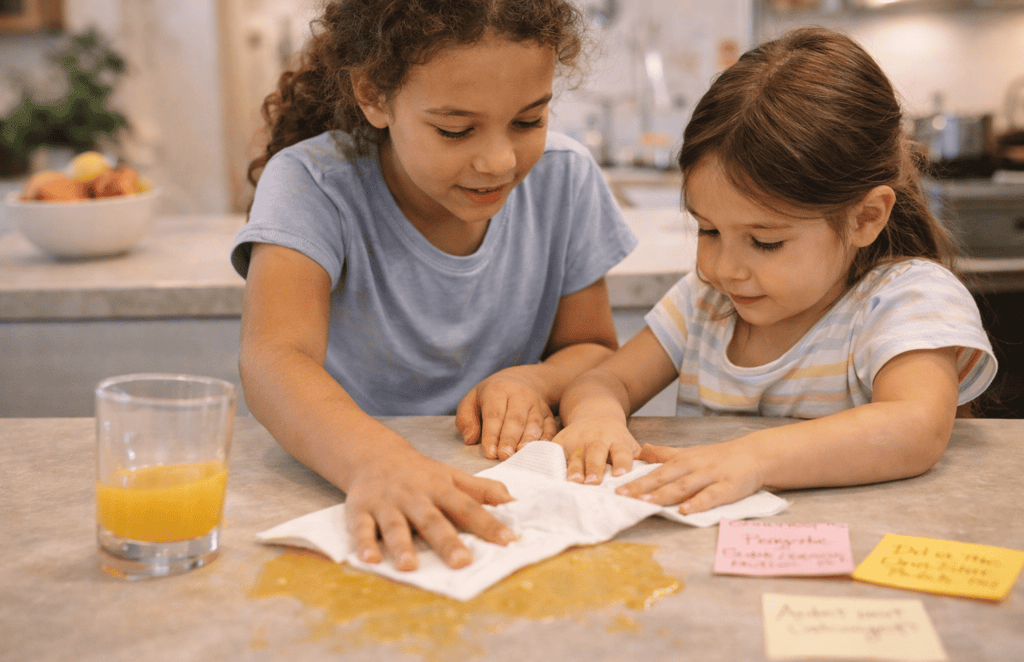
When juice spills, clean it together.
When a chore is forgotten, remind without rescuing.
When a mistake is made, focus on repair rather than blame.
One of the most powerful things a parent can say is: “I made a mistake.” That sentence teaches accountability far more effectively than any long speech about responsibility ever could. Children notice how we speak to customer service workers, how we react under stress, and whether we return the shopping cart even when nobody is watching. Unfortunately, they also notice when we say “five more minutes” and mean forty.
A quiet reminder:
Model what you expect. Children learn more from how we handle our own mistakes than how we respond to theirs.
Open-Minded
Open-mindedness does not require international travel or elaborate cultural programming. It begins with perspective. Read stories from different cultures. Try unfamiliar foods. Listen to music from different places. Talk openly about how people live, celebrate, and think around the world. More importantly, normalize respectful curiosity.
When disagreements happen, ask: “What do you think the other person might have felt?” That single question quietly builds empathy and perspective-taking. Children do not need to agree with everyone. They simply need to learn that different experiences exist beyond their own. And honestly, trying food from another culture with dramatic suspicion before eventually admitting it tastes good is practically a childhood rite of passage.
A helpful shift:
You do not need to explain everything. Sometimes curiosity alone is enough to widen a child’s view.
Caring
Caring grows through repetition, not grand gestures. Helping a sibling. Carrying groceries. Comforting a friend. Saving the last piece of garlic bread for someone else despite obvious personal sacrifice. These moments matter.
Children build empathy by participating in caring routines consistently. They also learn it through receiving care themselves. Feeling safe, listened to, and supported helps children extend the same compassion outward. Kindness becomes part of a child’s identity when it is noticed and valued regularly, not only praised when it looks extraordinary.
Try noticing this:
Name the care you see. A simple “That was thoughtful” helps children recognize their own empathy.
Risk-Taker
Risk-taking in the PYP is about courage, not danger. Trying a new activity. Speaking in front of others. Joining a game. Ordering food independently. Walking into a classroom on the first day while pretending not to feel nervous. All of these require bravery. Children often assume confidence comes before action.
In reality, confidence usually arrives afterward, quietly and a little out of breath. The goal is not to eliminate fear. It is to help children learn they can survive it. And sometimes the biggest risk a child takes is raising their hand while absolutely unsure if “photosynthesis” is pronounced correctly.
A small mindset shift:
Say “You tried something new” more often than “You did it perfectly.” Effort builds resilience.
Balanced
Balance is not about perfect routines or color-coded schedules worthy of a productivity documentary. It is about rhythm. Children learn balance when they see adults resting, moving, creating, connecting, and disconnecting without guilt. A walk outside. Quiet reading time. Unstructured play. Family meals without everyone simultaneously scrolling different screens while claiming to be “listening.”
These moments teach children that life is not meant to feel like constant performance. Many children today grow up surrounded by pressure to achieve, produce, improve, and optimize everything. Balance reminds them that rest and joy matter too.Let children see you pause.Balance is modeled far more effectively than it is taught.
Reflective
Reflection turns experience into understanding. It does not need to be formal. A short daily conversation is enough:
What went well today?
What felt hard?
What would you like to try tomorrow?
These questions help children notice patterns in their thinking, emotions, and choices.
Over time, reflection builds self-awareness and resilience. Some children will answer deeply. Others will stare at you while eating crackers and say, “I don’t know.” Both are normal. Reflection is not about forcing emotional breakthroughs every evening before bedtime. It is about creating regular space for children to think about themselves gently and honestly.
One thing to remember:
Reflection works best when it feels safe, not evaluative.
Knowledgeable
Knowledge grows when interests are followed, not forced. If your child loves space, stargaze.
If they love cooking, measure and experiment. If they love animals, observe and research together. Children learn deeply when knowledge connects to curiosity and real life. Not every interest needs to become an enrichment opportunity, a structured unit, or a future career plan.
Sometimes children should simply enjoy learning for the sake of learning. A child who memorizes every dinosaur name with alarming accuracy is still developing valuable research skills, even if they cannot currently remember where they left their socks. Depth matters more than breadth. One interest explored well builds lasting understanding.
Bringing the Learner Profile Home
Families do not need to replicate school at home. The Learner Profile is not a checklist to complete or another parenting standard to feel guilty about by Thursday evening. It is a collection of qualities that grow slowly through relationships, routines, conversations, mistakes, and ordinary moments. Some days you will nurture these beautifully. Some days everyone will survive on toast and emotional recovery. Both count.
Children do not need perfect parents or perfect learning environments. They need adults who stay curious, responsive, and willing to grow alongside them. Long before children remember the Learner Profile by name, they experience it through the way home feels. And despite the laundry piles, unfinished dishes, and missing water bottles, your home is already a very good place for that.