Five SEL Activities Kids Love and Actually Learn From
Social and emotional learning does not have to be complicated. This post shares five simple SEL activities children genuinely enjoy, drawn from real classrooms and homes, that help kids understand their feelings, build empathy, and feel safe being themselves.
CHILD DEVELOPMENTSOCIAL-EMOTIONAL LEARNING
Lardi
1/20/20265 min read


Social and emotional learning is often talked about as if it lives only on glossy posters or laminated charts. We explain empathy like it is a worksheet. We praise resilience like it is a sticker you earn and then quietly forget about.
But in real classrooms and real homes, SEL shows up in much smaller, messier ways. It lives in how a child comforts a friend whose tower fell down. In how they negotiate whose turn it is. In how they admit, sometimes very quietly, that they feel nervous before standing up to present. Those moments matter more than any scripted lesson because they reveal who children are becoming when they think no one is watching.
That is why SEL activities need to do more than fill time or tick a box. They should help children breathe, reset, express themselves, and make sense of what is happening inside them. Over the years, I have noticed something important. The activities that work best are the ones children ask for again and again, often followed by the hopeful question, “Can we do that one more time?” usually right before the bell rings.
Below are five SEL activities that have stayed with me across classrooms, countries, languages, and age groups. They work with confident children and quiet ones, with energetic rooms and tired afternoons. And they work just as well at home, at the kitchen table, or on the edge of the bed when the day has been long.
1. Mood Mapping With Colors
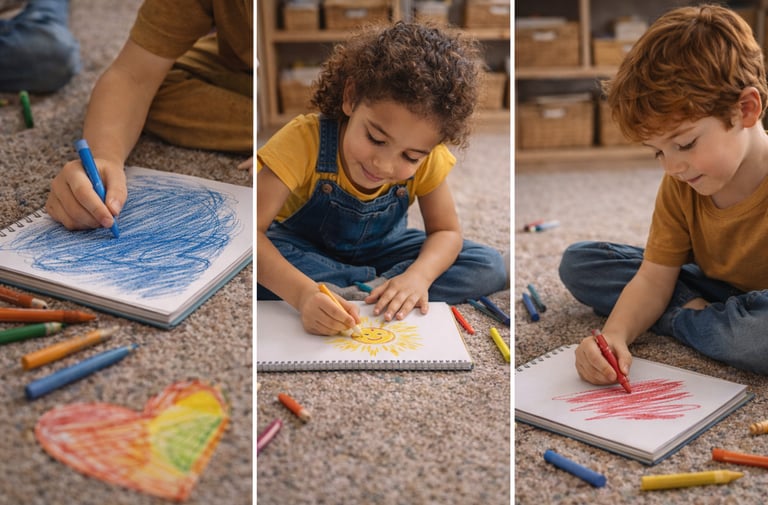
Children do not always have the words for how they feel, but they understand color instinctively. Place a few crayons or markers in front of them and ask a simple question. Which color feels like your day today? The answers often open doors that language sometimes keeps shut, especially before breakfast. A child might choose blue and explain that it feels heavy. Another might pick yellow because something made them laugh at school.
Invite them to draw a shape, pattern, or image that matches the color. It does not need to be detailed or “good.” The goal is expression, not art. This small step lowers pressure and allows feelings to come out sideways when words feel too big. Teachers can use this as a morning check-in. Parents often find it works beautifully before bedtime, when emotions tend to surface. Without forcing a conversation, children practice emotional awareness, labeling, and self-expression in a way that feels safe.
2. The Compliment Circle With a Twist
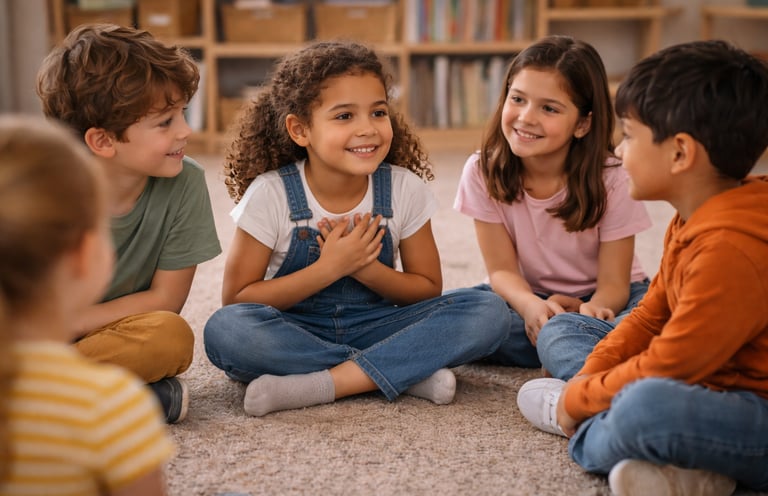
Compliment circles are familiar, but children know immediately when something feels forced. So I added a small twist that changes everything. Instead of starting with compliments for others, each child begins by naming one strength about themselves. It can be small. I tried something new today. I did not give up. I helped someone. This is harder than it sounds. For some children, it is surprisingly uncomfortable. Honestly, it is for many adults too.
But once one child speaks, the room shifts. After each child shares, classmates are invited to add one more strength they noticed. Confidence spreads quietly. The atmosphere softens.
This activity builds self-esteem, encourages thoughtful language, and creates a culture where strengths are named without embarrassment. At home, it works well around the dinner table or during a weekly family check-in, especially when everyone participates.
3. The One-Minute Mind Reset
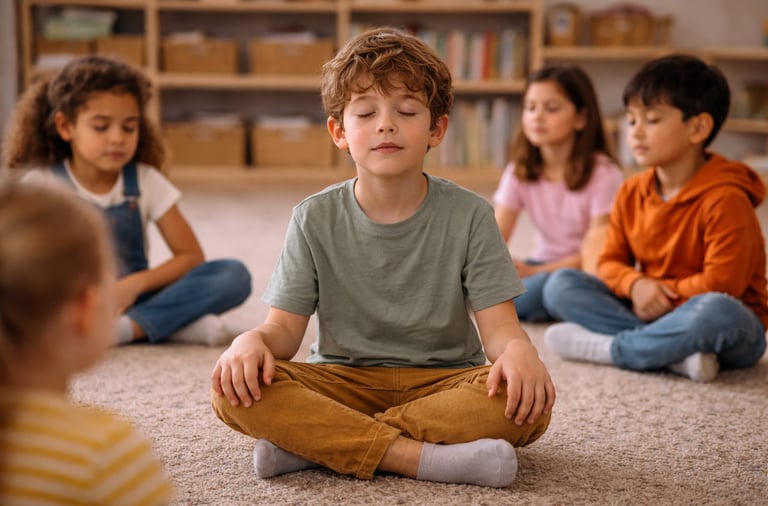
If you teach, you know how quickly a room can move from calm to chaos. Sometimes in under thirty seconds. The one-minute mind reset is a simple pause that gives children an internal anchor. Everyone sits comfortably with both feet on the floor. Eyes can close or lower. You guide them gently. “Imagine your thoughts are tiny clouds drifting across the sky. You do not have to chase them.” That is it.
I used this before tests, after playground conflicts, and on rainy days when indoor energy crackled like static. Parents can use it when emotions run high or when bedtime feels rushed and scattered. It is a small ritual, but it teaches something powerful. Children learn they can return to themselves when things feel overwhelming.
4. Story Sharing in Pairs
Children love stories, especially their own. In this activity, children pair up and share a short story about something that happened during the week. It might be a proud moment or a challenge. The listener has one job, listen without interrupting. Harder than it sounds. After they switch roles, each listener reflects back one thing they heard or admired. This simple exchange builds empathy, active listening, and the rare skill of making someone feel truly seen.
I have watched quiet students slowly open up through this activity, realizing their voice matters. Families can try it during car rides or after school. Even a few uninterrupted minutes can strengthen emotional trust.
5. The Gratitude Line
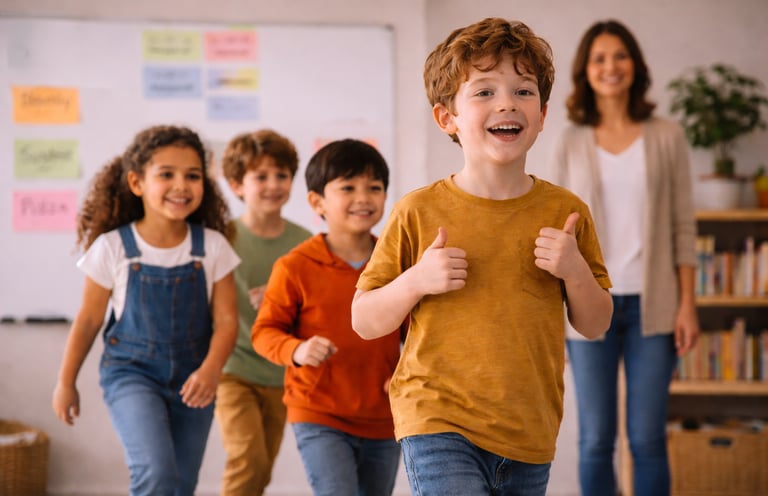
Gratitude journals are wonderful, but children sometimes tire of writing. So we turned gratitude into movement. Children form a line and take one step forward each time they name something they are grateful for. It becomes a gentle march of appreciation, complete with varying levels of enthusiasm and occasionally dramatic footwork.
Gratitude can be big or small. A sunny morning. A shared snack. A new library book. By the end, the energy in the room shifts. Movement helps gratitude settle into the body, not just the mind. At home, families can try a mini version by taking turns naming one thing they appreciated about the day.
Why These Activities Matter
These activities are simple, but their impact lasts. SEL does not require special programs or complicated materials, which is good news because most of us are already juggling enough. What it requires is presence. A willingness to slow down. And the belief that helping children understand themselves is just as important as teaching them to read or multiply.
We cannot protect children from every storm they will face, but we can give them inner tools. Tools that help them return to calm, speak honestly, and move through the world with empathy. If you try any of these activities at home or in the classroom, you may notice something unexpected. The learning goes both ways. Children teach us too. They remind us that emotions are not something to fix and connection is how we grow.